A natural-history studio rooted in Coorg.
We observe a place closely, publish what we learn, grow what belongs here, and build ways for people to encounter it with greater attention.
Enter the Field Atlas→The work is quiet. The record should last.
A sighting tells you a bird was there. It does not tell you why — which forest held it, at what elevation, in which flowering month, in whose shade, beside what else. That is the harder question, and the one worth answering.
So a record is where the work starts, not where it ends. Ridge, shola, evergreen, coffee shade, stream, paddy: the ground changes every few hundred metres here, and what lives on it changes with it.
The Coorg
Field Atlas
Published one subject at a time, in the order the work is ready.
What is understood is drawn, and what is drawn is printed. The first volume is finished and in private preview.
Volume I · 140 pages
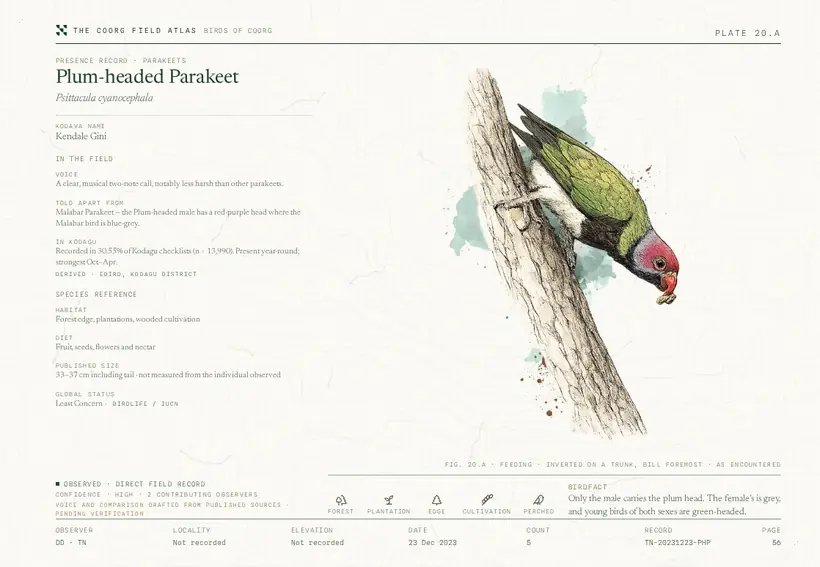
Plum-headed Parakeet
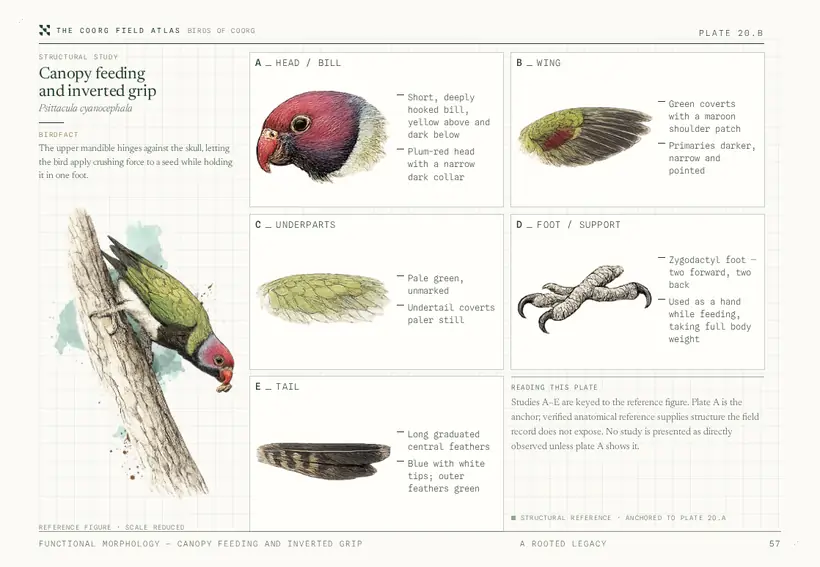
Five study positions
The Coorg Field Atlas holds forty-nine species. Each is given a presence plate — what was seen, where, when, by whom — and a structural plate drawn to the same five positions on every bird, so that any two in the book can be read against each other.
A tree that falls does not stop working.
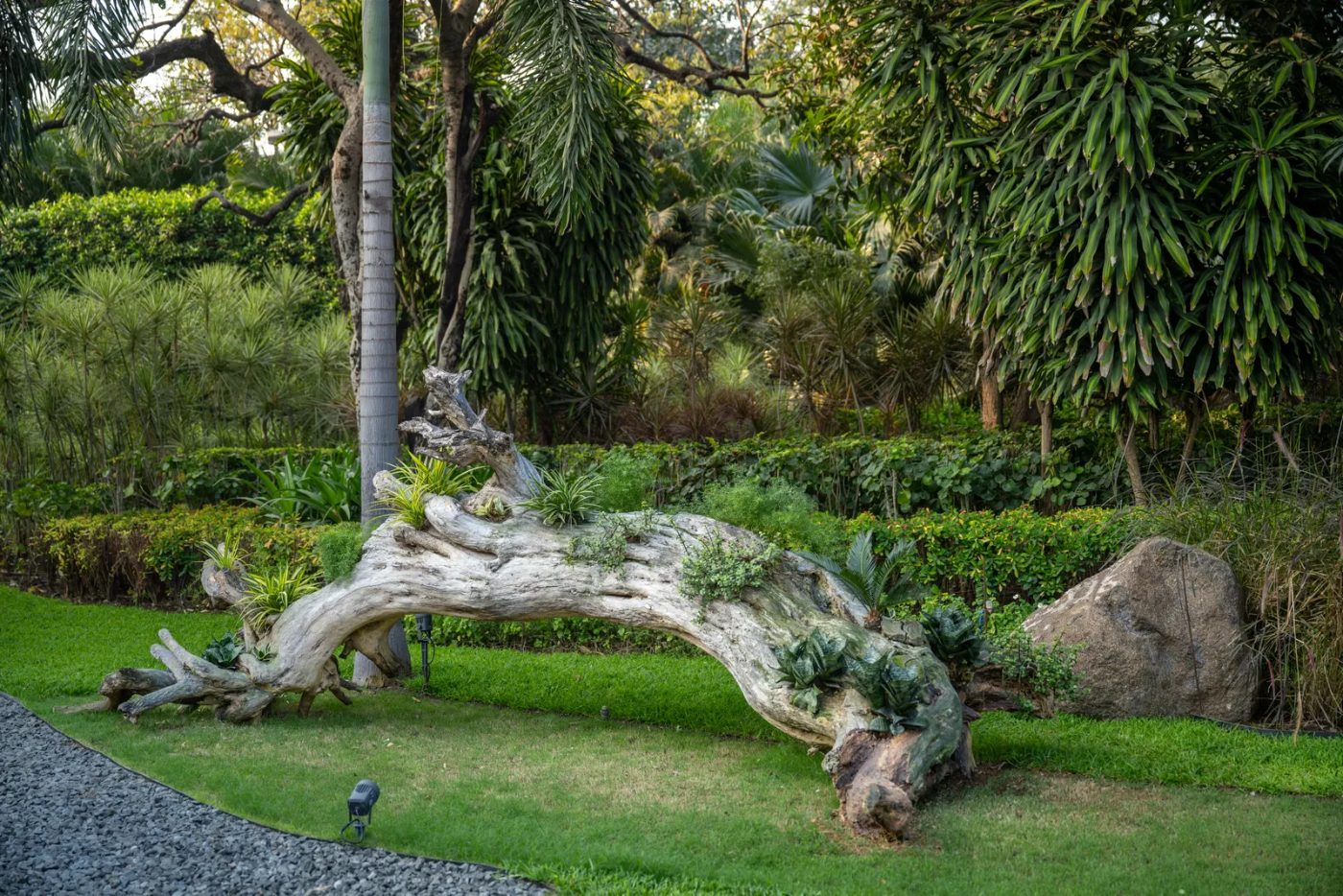
Deadwood is not waste. On the forest floor a fallen trunk becomes the richest thing there is: it holds water, it holds heat, and for decades it carries more living matter than the standing tree did.
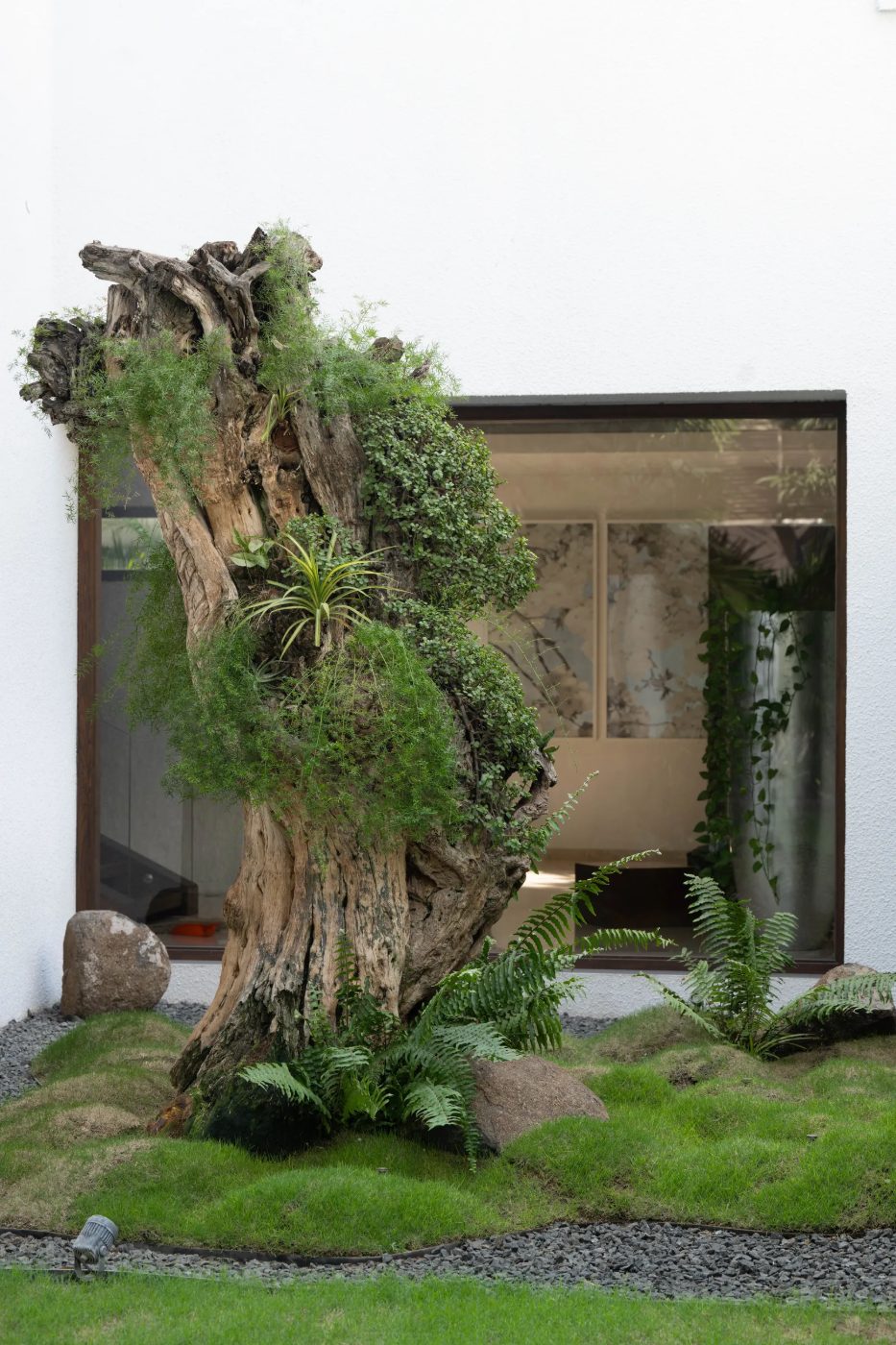
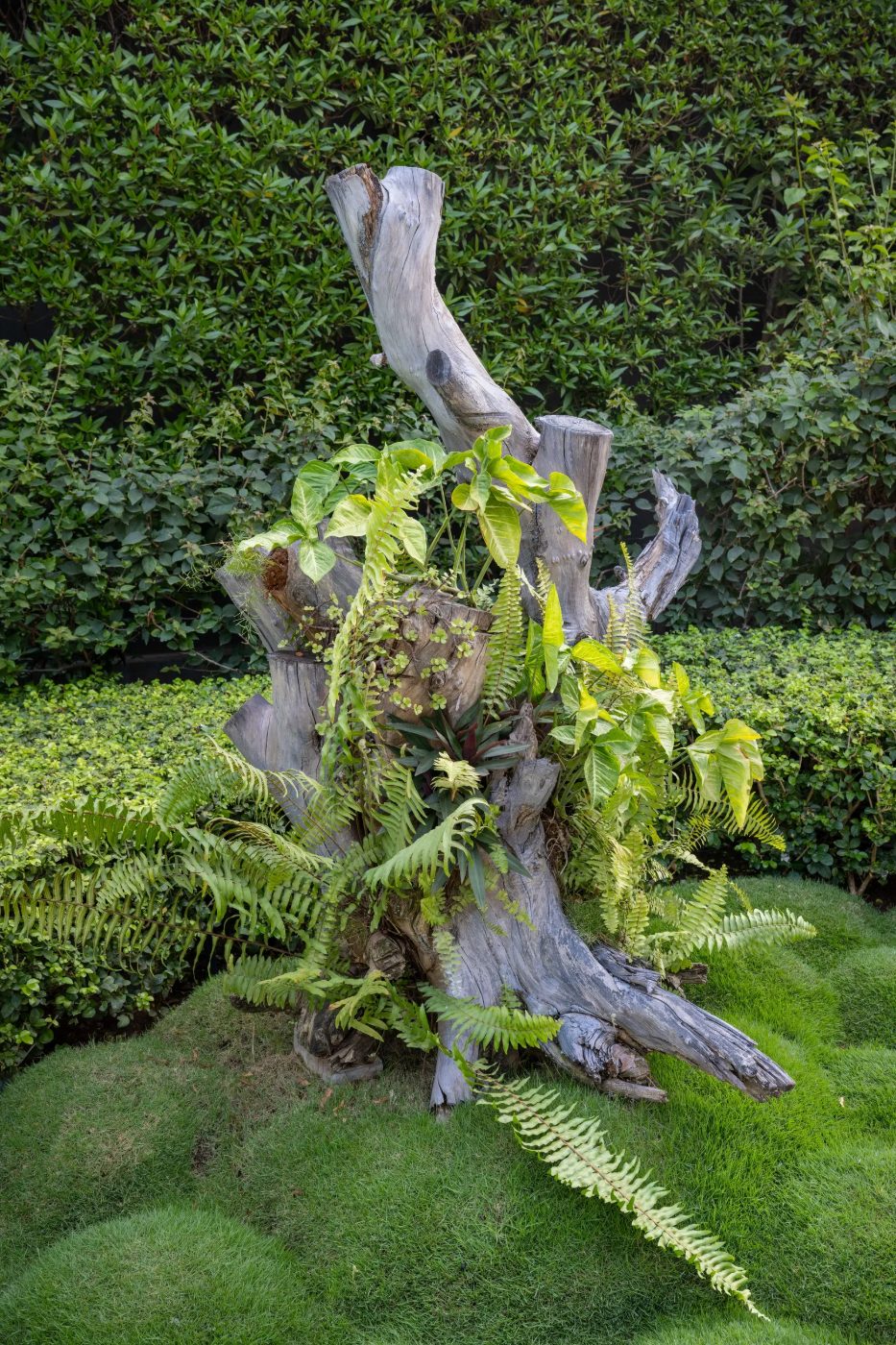
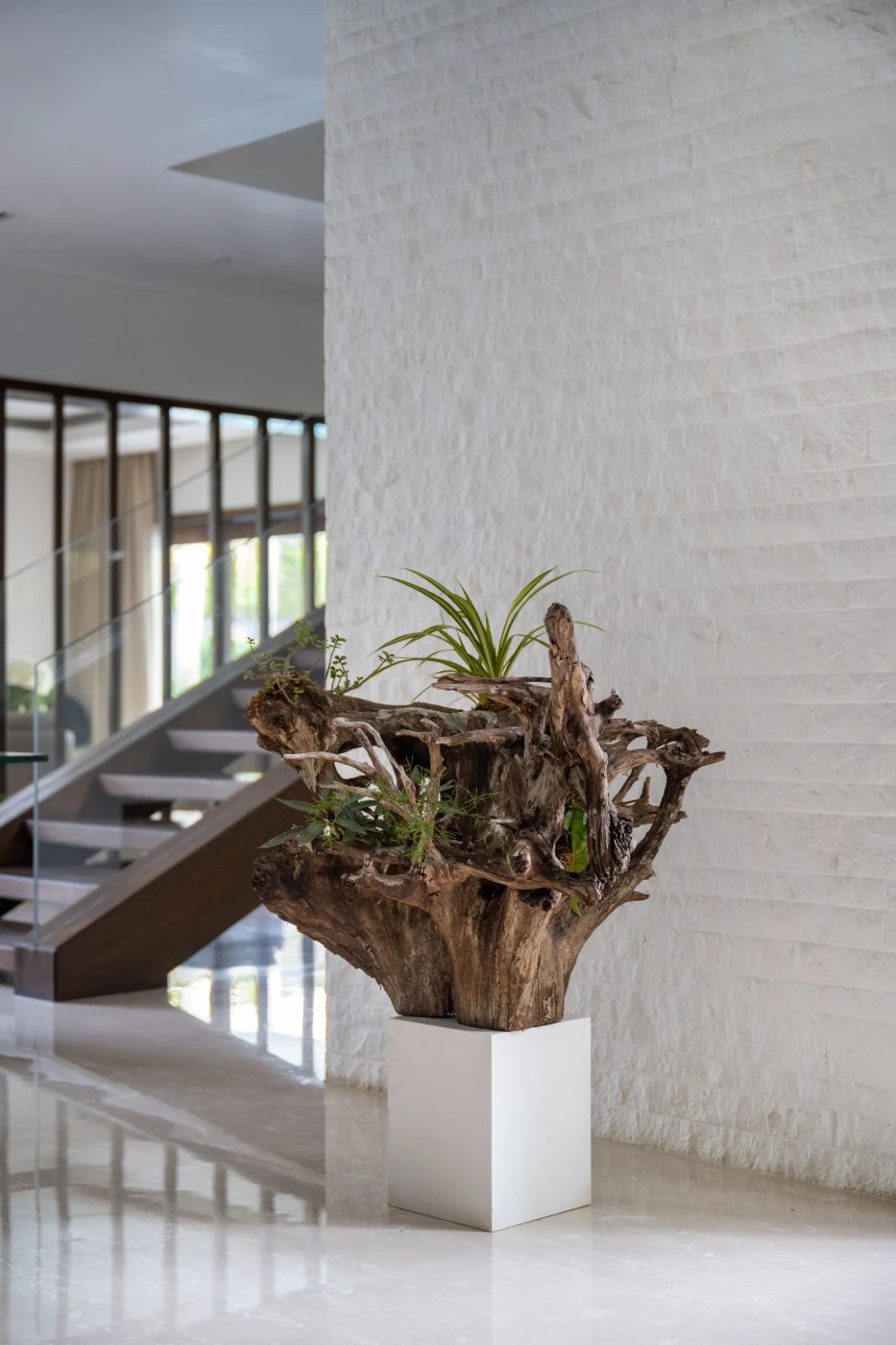
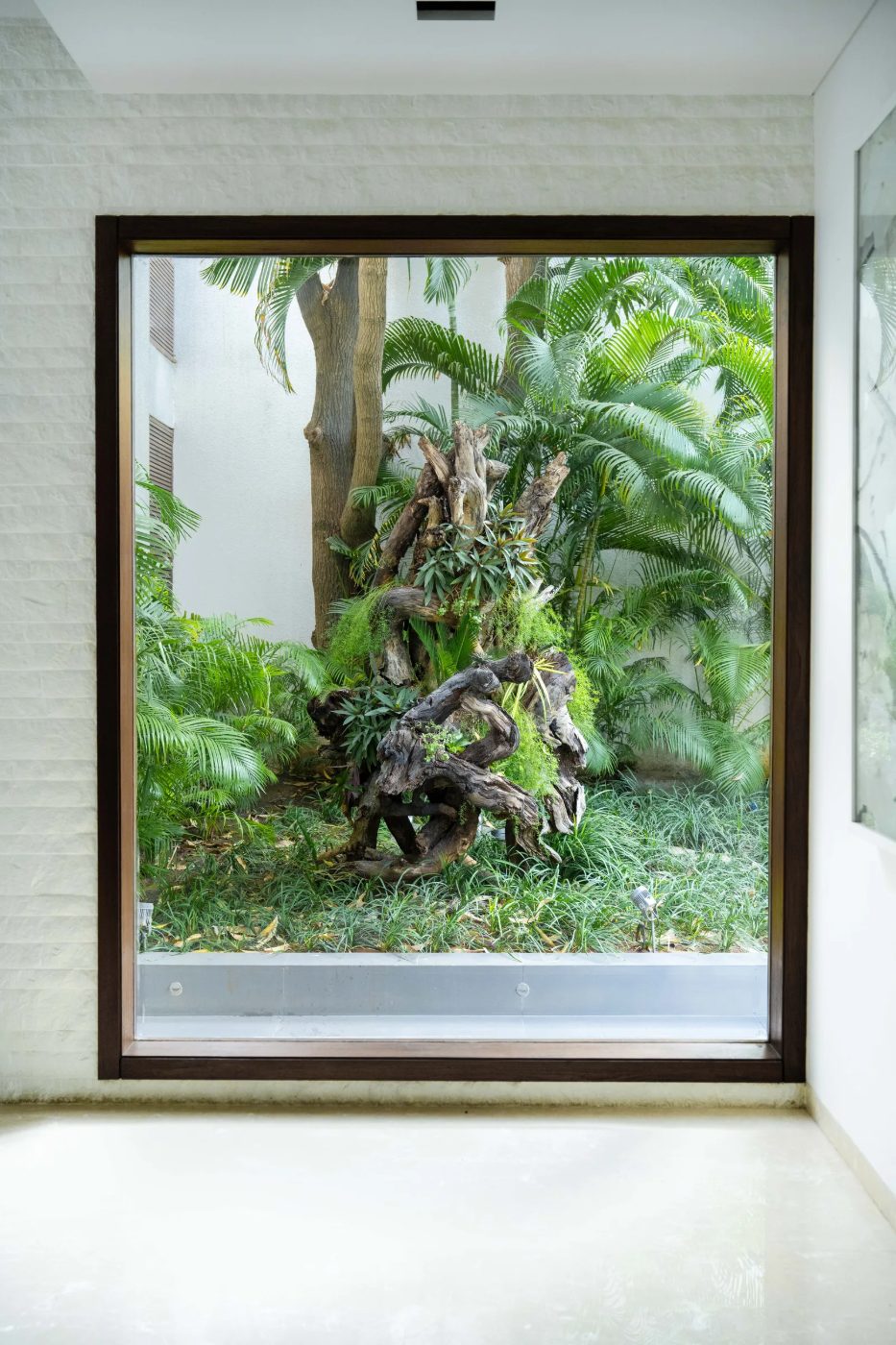
We lift timber that would otherwise be burnt and plant it. Moss, algae, ferns, grasses and leaf colour, gathered near where the wood fell and chosen against the garden it is going into. No two are alike, because no two trees fell the same way.
Each piece leaves with the species planted on it and the place the wood was lifted from
Everything we plant, we can name the parent of.
Native stock raised from seed collected on the estate and in the district, grown out under the canopy it came from. Each plant leaves with its parent tree written down, so that what is planted somewhere else stays traceable to a place.
The hill, walked at the speed it asks for.
Small groups, on foot, before light. Not an itinerary but a method: how to hold still, how to date a sighting, how to place it, how to count it, how to sign it.
Four things, done slowly, in one place.
Join the journey.
Twice a year we write: what was recorded, what was published, what was planted. Leave your email and the letter will reach you.
Recorded for time.
Karnataka, India
An undertaking of the
House of Kokalera